A surgeon’s note on tissue preservation, the quiet shift toward “minimally invasive,” and the one word an industry leader used to define his company. Notes on Motiva breast surgery, from the consultation room.
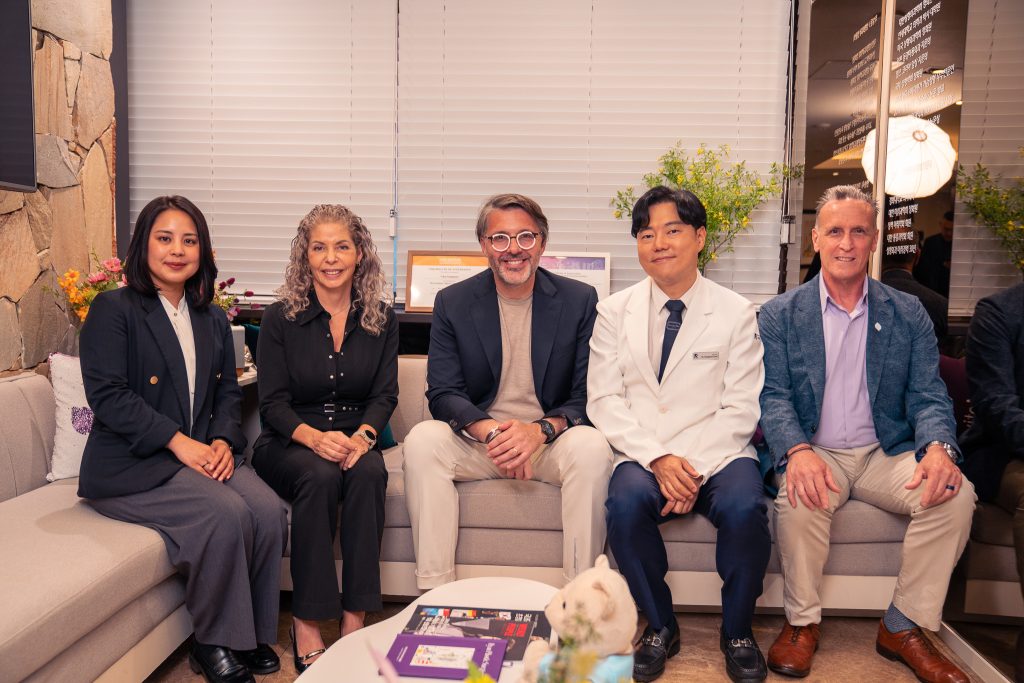
Hello. I’m Dr. Sangmun Choi, a plastic surgeon and the director of Ryan Plastic Surgery in Seoul, where my work focuses on breast augmentation and revision.
I practice in a city that, for better or worse, sits near the center of the world’s conversation about aesthetic medicine. Patients fly in from the United States and Japan. Colleagues come to observe in the operating room. And every so often, the people who design the devices I work with sit down across from me to talk.
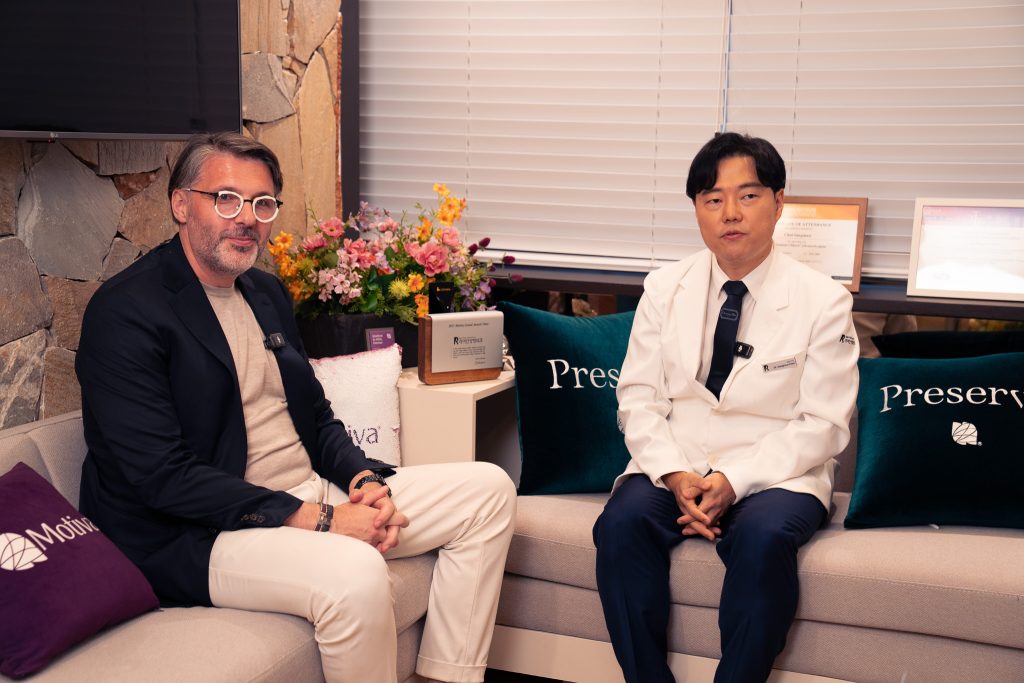
Recently, one of them did. Ivan Milić is the senior vice president of Establishment Labs — the company behind the Motiva brand — and he oversees its commercial operations across the entire world outside the United States. He has spent close to two decades in this industry. We met for an exchange meant to be academic rather than promotional, and I left thinking less about products than about where this field is quietly heading.
What follows is my attempt to make sense of that conversation. It is not a transcript, and it is certainly not an advertisement. It is a surgeon’s reflection.
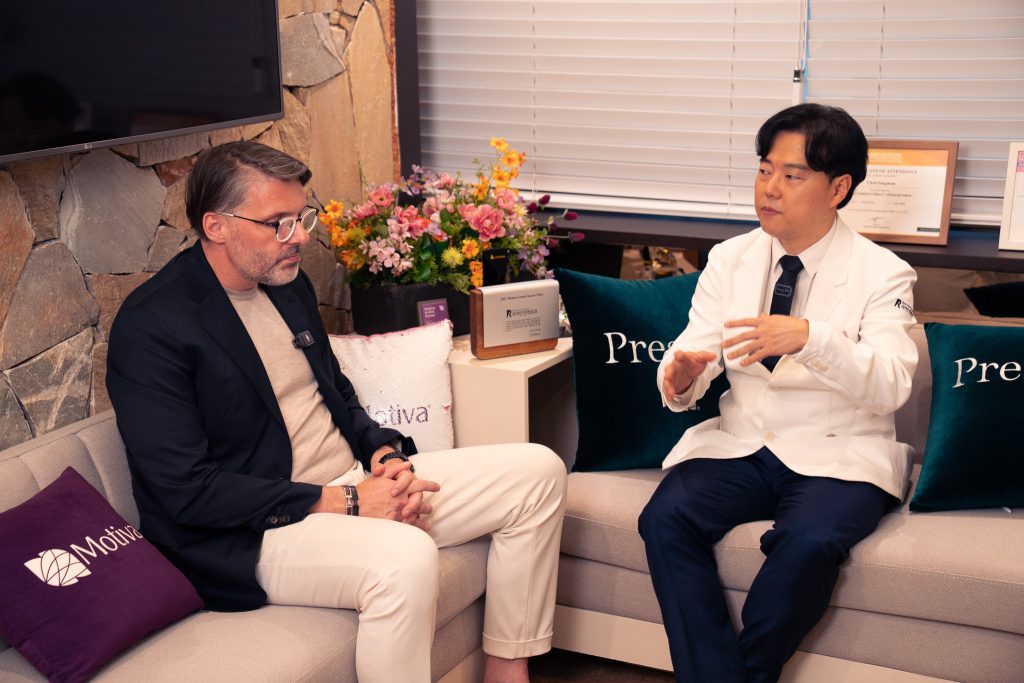
The one word I didn’t expect
Near the end of our conversation, I asked him to define his company’s philosophy in a single word. I expected something from the usual vocabulary of a market leader — innovation, perhaps, or technology.
Instead, without hesitation, he said: women’s health.
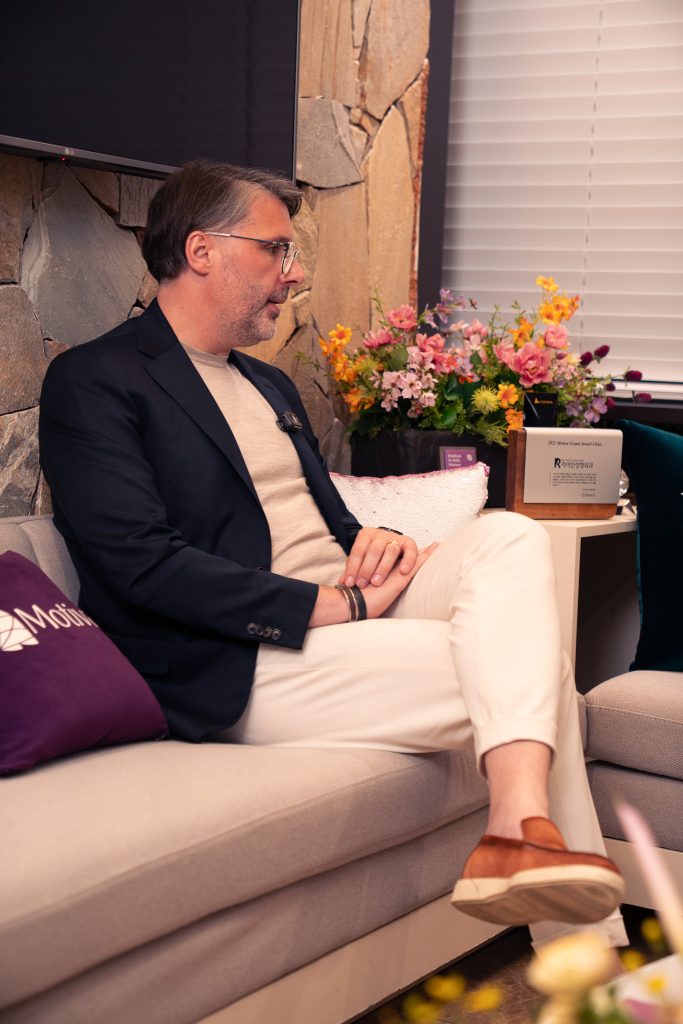
“Even when there’s an opportunity to achieve something in the market,” he added, “we don’t pursue it at the cost of compromising women’s health.”
I sat with that for a moment, because it is an instinct a surgeon recognizes immediately. Breast augmentation is not a necessary operation. One of the most important sentences I say in my consultation room is some version of you don’t need to do this. I’ve come to believe that the surgeons — and the companies — who ask “should this be done?” before “can this be done?” are the ones who ultimately protect the patient. Hearing a global executive reach for the same instinct was, I’ll admit, reassuring.
Why so many women still hesitate
What stayed with me most was something he said about the patients who don’t show up. For all the visibility aesthetic surgery has gained, he told me, the majority of women still do not seriously consider breast augmentation an option. When his company looked into why, three reasons surfaced — and all three are conversations I have nearly every week.
Trust. The history of breast implants over recent decades has not been spotless. A patient who spends ten minutes researching the subject will find enough to make her ask, quite reasonably, can I actually trust this?
Fear of general anesthesia. For an operation that is, by definition, elective, the prospect of being put fully under is a genuine psychological barrier.
Recovery time. A decade ago, it was common to spend several days in hospital and a week or two away from ordinary life.
I found myself nodding through all three, because they are precisely the worries that occupy the most time in my consultations — and rightly so. No amount of technical detail about implants matters if a patient hasn’t first found honest answers to these. (If these are on your mind, you may find my notes on breast augmentation safety and recovery and pain useful.)
“Minimally invasive” is not a marketing word
The phrase running through our entire conversation was tissue preservation, alongside its close companion, minimally invasive. In breast surgery, much of this is now associated with approaches such as Preservé, which aim to preserve the breast’s existing architecture — its ligaments and tissue layers — as far as possible while placing an implant.
It would be easy to dismiss this as a slogan. I’d argue the opposite. Consider the trajectory of modern medicine. General surgery moved from large open incisions to laparoscopy and robotics. Cardiac surgery moved away from routinely opening the chest. Across nearly every specialty, the direction has been the same: achieve the same goal while disturbing less. Breast surgery is simply — and somewhat belatedly — joining that arc. (I’ve written more about the thinking behind this approach in How Art Shapes My Approach to Breast Surgery.)
Milić put it well when he reminded me that genuine innovation in this field has historically been rarer than the marketing implies. A good deal of what we still practice descends from doctrine set in the late 1980s and early 1990s. The real shift, in his view, is not a new shell or a new gel — it is the philosophy of preserving tissue and minimizing disruption.
Here I want to be careful, because this is exactly where enthusiasm can mislead a patient.
No single technique is right for everyone. A tissue-preserving approach is not automatically superior to a conventional one.
The appropriate method depends on a patient’s anatomy, skin quality, desired size and shape, and surgical history. If a clinic presents any one technique as universally best, that is a reason for more caution, not less. What patients are entitled to is the map — an honest sense of where the field is moving — so that when a surgeon recommends a particular approach, they can understand the reasoning behind it.
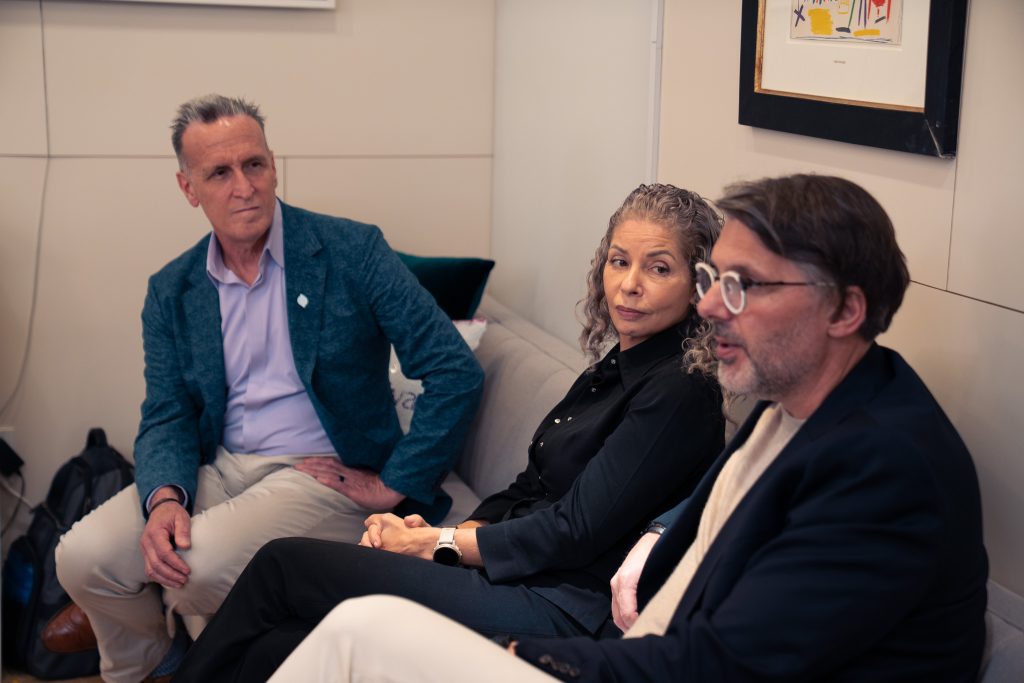
What an industry leader noticed about Korea
I asked him what had impressed him most while visiting clinics here. I assumed he would point to a device, or to surgical volume.
He didn’t. He said it was the way Korean clinics communicate with patients — a standard he described as among the best he had encountered anywhere in the world.
That made me reflect on my own daily work. Patients here ask hard questions. They compare. They study before they ever walk through the door. For a surgeon, that is pressure — the pressure to explain accurately and honestly, without shortcuts. But it is precisely that pressure that produces better medicine. In the areas where patients don’t ask questions, doctors are quietly free to grow complacent. I’ve come to think that demanding patients make me a better surgeon, not a more harried one.
Back to the consultation room
After Milić left, I returned to my afternoon clinic. My first consultation was with a woman who had undergone breast surgery elsewhere, been unhappy with the result, and come seeking a second opinion.
The first thing I said to her had nothing to do with new techniques or implant types. It was simply: Tell me, from the beginning, what’s been bothering you.
Devices evolve quickly, and so does surgical philosophy. On balance, I believe the movement toward preserving tissue and minimizing harm is a genuinely good direction for this field. But the single most important act in my consultation room — the one no new technology will ever replace — is listening to a patient all the way to the end of her story.
The executive who watches the global market and the surgeon who meets one patient at a time turned out, that afternoon, to be looking at the same thing: women’s health. If both the companies and the doctors keep that as their measure, I don’t think either of us will lose the path.
Related reading
- Motiva Asia Pacific Summit 2025 – Safety Data & Future Trends
- Motiva APAC Summit 2025: Breast Revision Surgery Insights from Singapore
- How Art Shapes My Approach to Breast Surgery
This article was originally published here. It is also available on Medium: What a Conversation With Motiva’s Leadership Taught Me About the Future of Breast Surgery.
This article is an informational reflection on a professional conversation. It is not medical advice and does not guarantee the efficacy or safety of any product or technique. Regulatory approval for specific devices varies by country, and some products discussed within the industry may not be approved in every market. All breast surgery carries possible complications — including bleeding, infection, capsular contracture, implant-related problems, asymmetry, changes in sensation, and the possibility of reoperation — and outcomes vary considerably between individuals. Any decision about whether or how to undergo a procedure should be made through an in-person consultation with a qualified specialist.
About the author — Dr. Sangmun Choi is a board-certified plastic surgeon and the director of Ryan Plastic Surgery in Seoul, South Korea, where his practice focuses on breast augmentation and revision. He writes about surgical philosophy, patient communication, and the evolving science of breast surgery for an international audience.