For many international patients considering breast augmentation in Korea, the main questions are not only about size or shape. They also want to know how painful recovery will be, how long they need to stay in Korea, and when they can safely return to their home country.
One technique that many patients ask about is Preserve Technique breast augmentation. At Ryan Plastic Surgery Clinic in Korea, this approach is used for selected patients when the anatomy, tissue condition, implant choice, and desired result are appropriate.
The goal is simple: create a beautiful breast shape while reducing unnecessary tissue trauma as much as possible. In many suitable cases, this may help patients experience less pain, smoother early recovery, and a more comfortable first week after surgery.
What Is Preserve Technique Breast Augmentation?
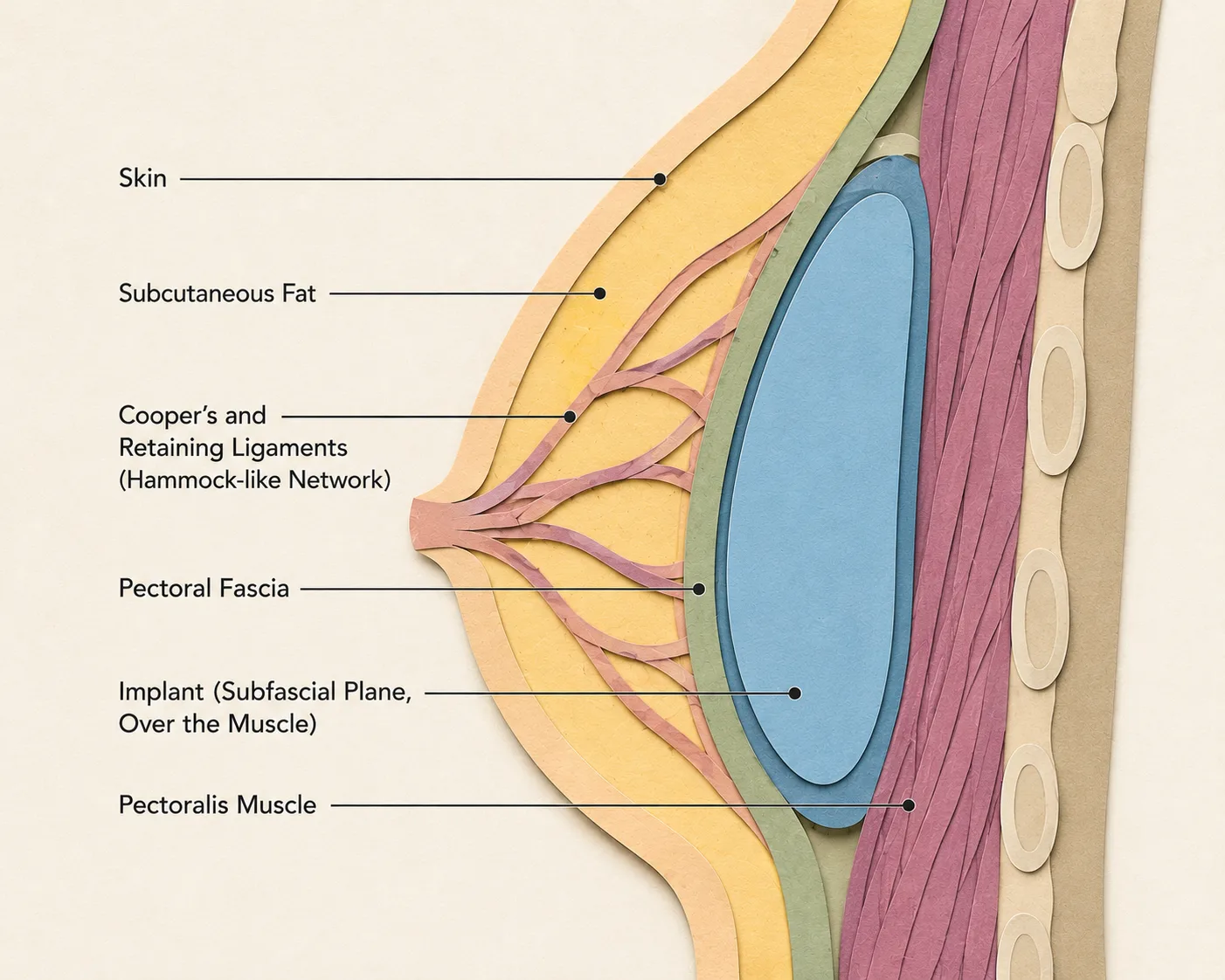
Preserve Technique breast augmentation is an approach focused on preserving natural tissue support and minimizing unnecessary disruption during implant placement.
In traditional breast augmentation, the implant pocket may be created under the muscle, over the muscle, or in another plane depending on the patient’s anatomy. In Preserve Technique cases, the surgical plan often focuses on careful tissue handling and stable implant placement while maintaining important support structures as much as possible.
This may include a subfascial or tissue-preserving plane in selected patients. The exact technique is not chosen by trend or preference alone. It should be chosen after a surgeon evaluates:
- Skin thickness
- Breast tissue volume
- Chest wall shape
- Existing asymmetry
- Implant size and profile
- Desired upper-pole fullness
- Lifestyle and exercise habits
- Risk of visible implant edges or rippling
The best surgical plane is the one that fits the patient’s body safely and predictably.
Why Patients Ask About Preserve Technique
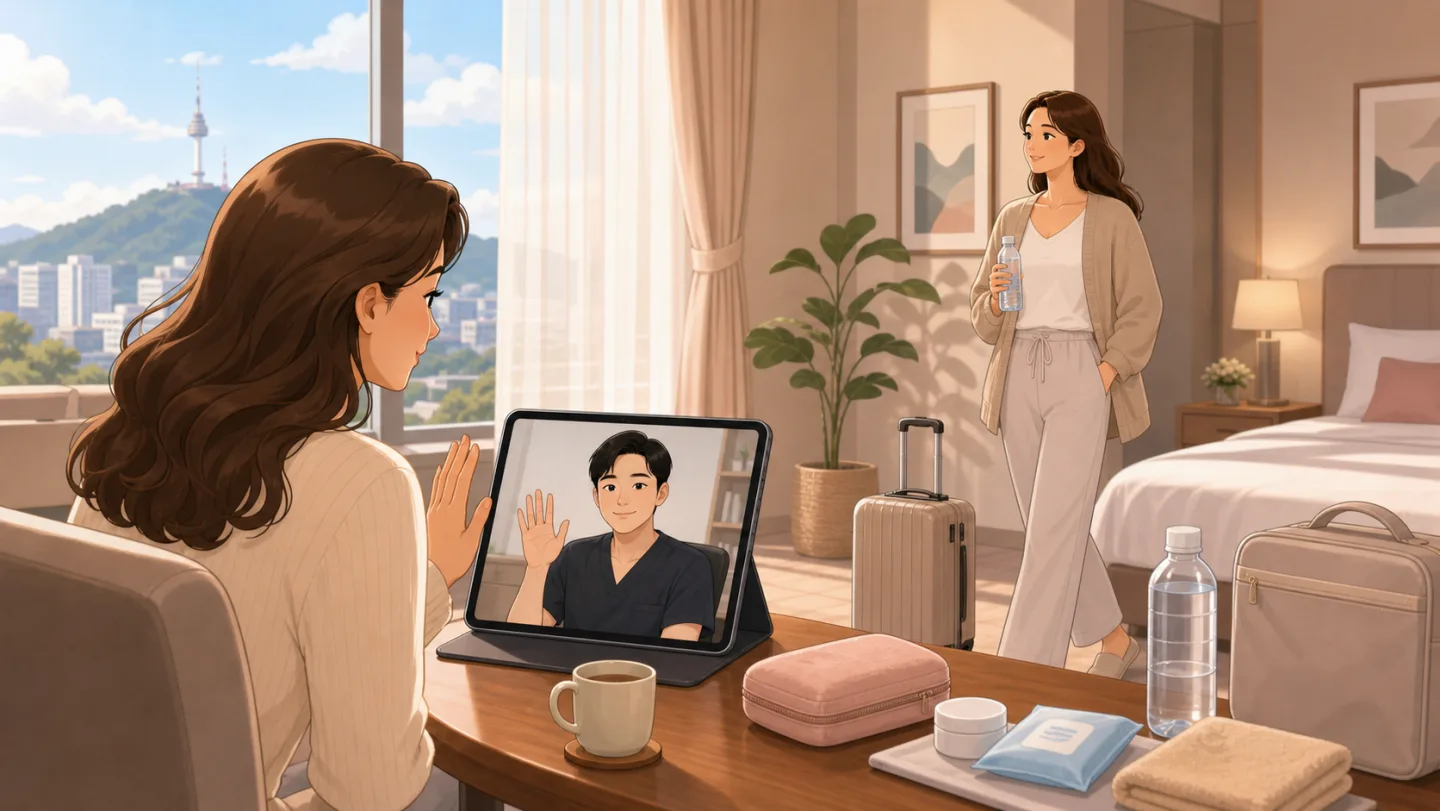
International patients often have limited time in Korea. Many stay for about one week, complete early follow-up, then return to their home country. Because of this, recovery comfort matters.
Patients commonly ask:
- Will breast augmentation be painful?
- Can I walk around during the first week?
- Will I be able to fly home after follow-up?
- Is there a technique with less muscle pain?
- Can recovery be faster?
Preserve Technique may be helpful for selected patients because it is designed to reduce unnecessary trauma to the surrounding tissues. When less tissue is disrupted, early recovery may feel more comfortable.
This does not mean there is no pain, no swelling, or no risk. Breast augmentation is still surgery. However, many patients who are good candidates may experience a smoother early recovery pattern.

How Preserve Technique May Reduce Pain
Pain after breast augmentation can come from several sources, including tissue stretching, pocket creation, swelling, muscle irritation, and incision healing.
When the surgical approach avoids unnecessary muscle disruption, some patients may feel less tightness or less movement-related discomfort. This can be especially relevant for patients who are sensitive to chest muscle pain or who want a faster return to light daily activity.
Potential benefits may include:
- Less chest muscle discomfort in suitable cases
- Easier arm movement during early recovery
- Less tightness when standing or walking
- More comfortable follow-up during the first week
- A smoother transition before returning home
These benefits depend on the patient. Technique alone does not guarantee a painless recovery. Implant size, tissue elasticity, swelling tendency, and personal pain sensitivity all matter.
Does Preserve Technique Mean Faster Recovery?
In many suitable cases, Preserve Technique may support faster early recovery because it aims to reduce unnecessary tissue injury.
At Ryan Plastic Surgery Clinic, most international breast augmentation patients stay in Korea for about one week before returning to their home country. During that week, the medical team checks incision healing, swelling, pain level, medication use, and whether the patient is ready to travel.
If Preserve Technique is appropriate and recovery is smooth, the surgeon may be able to observe a more stable recovery trend during the first week. This can make travel planning easier.
Still, staying longer is always better when your schedule allows it. More time in Korea means more opportunity for follow-up and more time to manage swelling, wound care, medication, and any early concerns.
Is Preserve Technique Right for Everyone?
No. Preserve Technique is not the best choice for every patient.
Some patients need a different implant pocket or a different surgical plan to achieve a safer or more stable result. For example, patients with very thin soft tissue, significant asymmetry, previous surgery, sagging, or larger implant goals may need a different approach.
The decision should be based on anatomy, not marketing language.
During consultation, your surgeon should explain:
- Which implant plane is recommended
- Why that plane fits your body
- What kind of recovery to expect
- Whether implant edges may be visible
- Whether muscle movement could affect the result
- What risks apply to your case
The best result usually comes from matching the technique to the patient, not forcing one technique onto everyone.
What About Infection and Complications?
All surgery has risk. Breast augmentation can involve complications such as infection, bleeding, delayed wound healing, capsular contracture, implant malposition, asymmetry, changes in sensation, implant rupture, or the need for revision surgery.
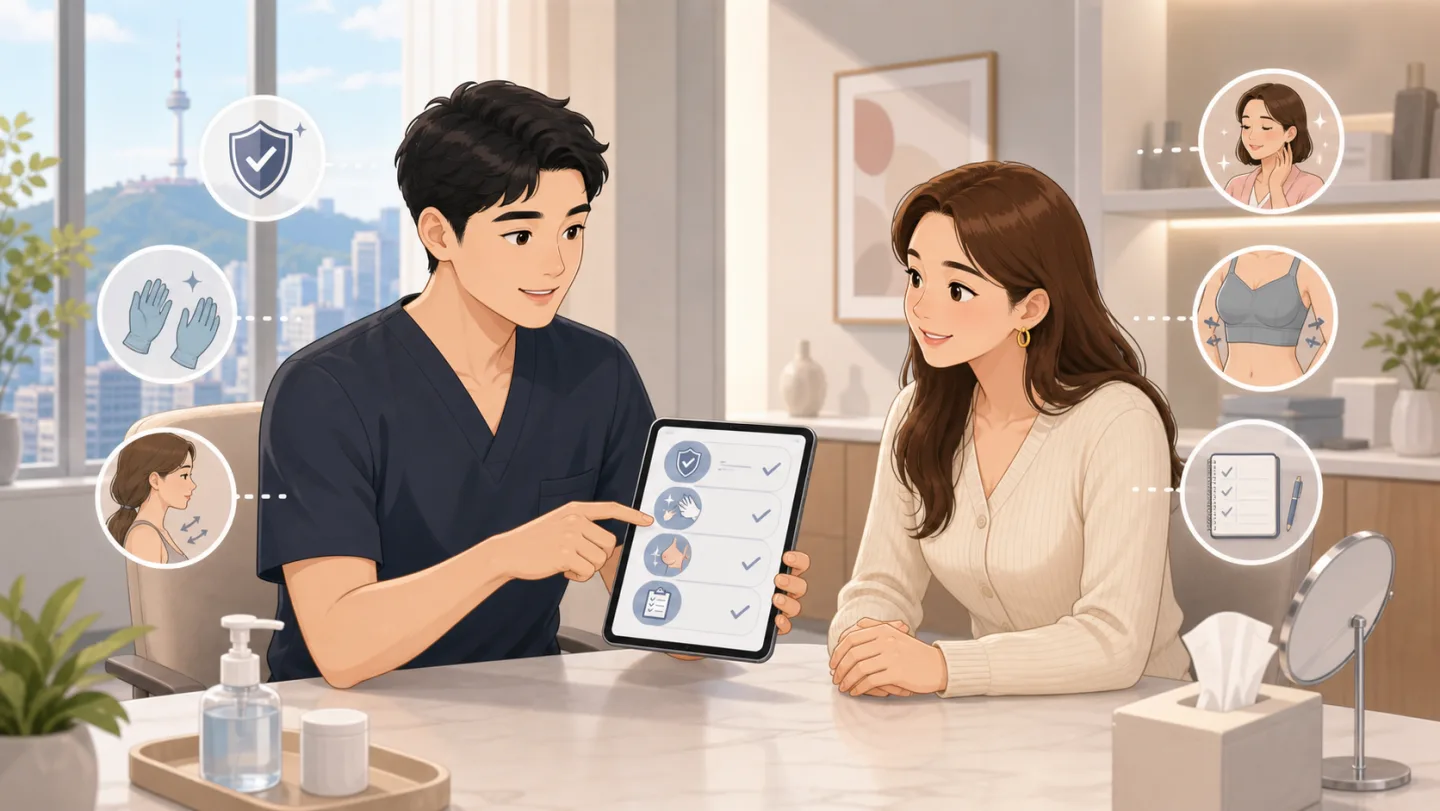
Infection is one of the risks that must always be taken seriously. The goal is to minimize that risk through sterile operating-room protocols, careful surgical technique, appropriate wound care, and clear medication instructions.
Before returning to your home country, your surgeon may prescribe antibiotics or other medications to support safer recovery after travel. Take all prescribed medication exactly as instructed, even if you feel comfortable.
You should contact the clinic or seek medical care if you notice warning signs such as:
- Fever
- Increasing redness
- Worsening swelling on one side
- Severe pain that is getting worse
- Unusual discharge from the incision
- Sudden breast shape change
- Shortness of breath or chest pain
Early communication matters, especially for international patients.
How Long Should You Stay in Korea?
Most international patients at Ryan Plastic Surgery Clinic in Korea stay for about one week after breast augmentation, then return to their home country after early follow-up.
For Preserve Technique breast augmentation, recovery may be faster and pain may be lower in suitable cases, but we still recommend planning your trip carefully. The first week is important for monitoring the healing process.
If you can stay longer than one week, that is even better. A longer stay gives the surgeon more time to check your progress and gives you a calmer recovery before a long flight.
For more details about travel planning, read our guide: How Long Should You Stay in Korea After Breast Augmentation?
What to Ask During Consultation
Before choosing Preserve Technique breast augmentation in Korea, ask your surgeon:
- Am I a good candidate for Preserve Technique?
- What implant plane do you recommend for my body?
- Will the implant be placed over the muscle, under the fascia, or in another plane?
- How much pain should I expect during the first week?
- How long should I stay in Korea?
- Will I receive antibiotics before returning home?
- What symptoms should I watch for after flying home?
- How will follow-up be handled after I leave Korea?
Clear answers are more important than simple promises.
Bottom Line
Preserve Technique breast augmentation at Ryan Plastic Surgery Clinic in Korea may be a good option for selected patients who want a natural result, less tissue trauma, less pain, and a smoother early recovery.
For international patients, this can be especially helpful because many stay in Korea for about one week before returning to their home country. A more comfortable recovery pattern can make that week easier, but it does not remove the need for careful follow-up and medication guidance.
The right technique should always be chosen after a detailed consultation with a qualified surgeon. Preserve Technique is valuable when it fits the patient’s anatomy and goals. When another method is safer or more predictable, the surgical plan should be adjusted accordingly.
Disclaimer: This article is for general educational purposes only and does not replace medical advice. Always follow the instructions of your surgeon or qualified healthcare professional.
Pingback: Breast Augmentation in Korea for Thin Patients: How Fat Grafting Can Create a More Natural Line - Breast Surgery Korea