I am Sangmun Choi, MD, PhD (최상문 박사, 라이안성형외과), a plastic surgeon in Seoul specializing in breast surgery and international patient care. Many patients who travel to Korea for breast augmentation return to the United States, Japan, Europe, or another country for long-term screening. For that reason, breast imaging after augmentation should be planned clearly from the beginning.
One common misunderstanding is that one scan checks everything. It does not. A mammogram, breast ultrasound, and breast MRI can all be useful after breast augmentation, but they answer different questions.

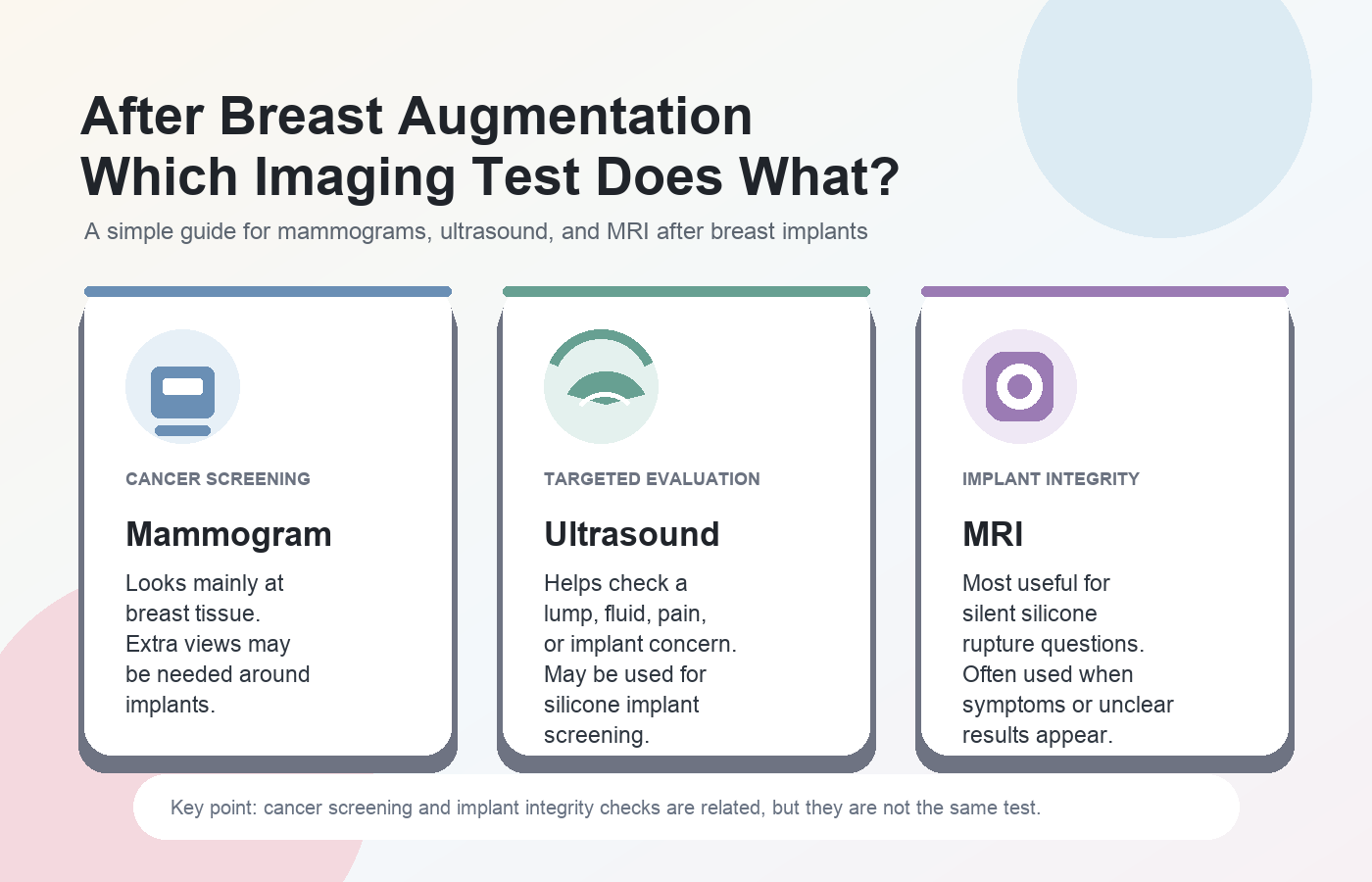
Breast cancer screening and implant checks are not the same
After breast augmentation, patients usually need to think about two separate goals:
- Breast-cancer screening: looking at the breast tissue according to age, risk factors, family history, and local screening guidelines.
- Implant integrity surveillance: checking whether a silicone or saline implant is intact, especially when symptoms or time from surgery make evaluation appropriate.
A normal mammogram report does not always mean the implant shell was fully evaluated. A normal implant ultrasound or MRI does not replace breast-cancer screening. The best follow-up plan separates these two questions instead of treating them as one test.
Can you have a mammogram with breast implants?
Yes. In most cases, patients with breast implants should continue age- and risk-appropriate mammography unless their own breast specialist recommends otherwise. The important step is to tell the imaging center that you have implants when you schedule the appointment, not only when you arrive.
The American Cancer Society notes that silicone and saline implants can make some breast tissue harder to see on standard mammogram views. For this reason, additional implant-displacement views are commonly performed so more breast tissue can be evaluated.

Before a mammogram, tell the technologist if you have pain, firmness, capsular contracture, recent surgery, or concern about rupture. Bring your implant card or operative information if available. This is especially useful for international patients whose surgery was performed in Korea but whose imaging will be done in another country.
Where ultrasound helps after breast augmentation
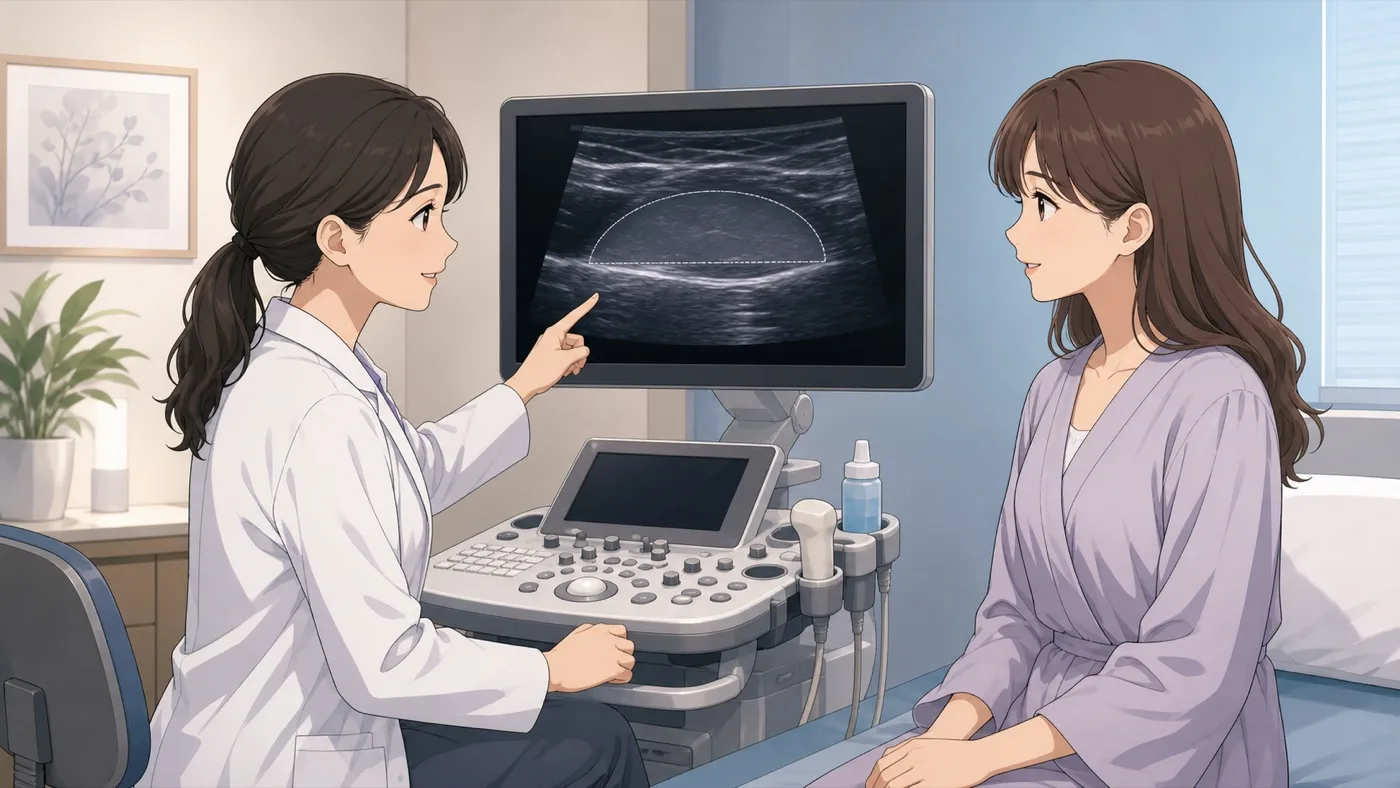
Breast ultrasound is often used when there is a specific concern: a lump, localized pain, swelling, fluid, or an uncertain finding from another exam. It can also help assess implant integrity in selected situations.
For silicone gel-filled breast implants, the FDA now recognizes ultrasound as an acceptable imaging option for rupture screening in asymptomatic patients. Ultrasound is widely available and does not use ionizing radiation, but the quality of the answer depends on the question, equipment, and the experience of the reader. If the ultrasound result is uncertain, MRI may be recommended.
When MRI is useful for silicone implant rupture
Silicone implant rupture can be silent. In other words, the breast may look and feel normal even when the implant shell has ruptured. The FDA describes MRI as the most effective method for detecting silent rupture of silicone gel-filled implants, while ultrasound is an acceptable screening alternative for asymptomatic patients.
For Motiva silicone gel-filled breast implants, FDA-approved patient labeling recommends the first ultrasound or MRI at 5 to 6 years after the initial implant surgery and then every 2 to 3 years thereafter for as long as the patient has the implants. If symptoms develop at any time, or if ultrasound findings are uncertain, MRI is recommended.

These intervals are about implant rupture surveillance. They do not replace mammography or other breast-cancer screening based on age, risk, symptoms, or the recommendation of a breast-imaging specialist.
Saline and silicone implants are followed differently
Saline implant rupture is usually easier to notice because the saline is absorbed and the breast loses volume. Silicone rupture is more likely to be silent, which is why imaging surveillance is discussed differently for silicone gel-filled implants.
However, symptoms should always be evaluated regardless of implant type. A new lump, persistent swelling, increasing firmness, new asymmetry, ongoing pain, redness, drainage, fever, or a late fluid collection around the implant should not simply wait until the next routine scan.
What international patients should keep after surgery in Korea
At Ryan Plastic Surgery Clinic in Korea, we encourage breast augmentation patients to keep both digital and paper copies of their implant information. This is especially important if future mammograms, ultrasound, or MRI will be done outside Korea.

- Implant brand, model, size, and serial information when available
- Date and country of surgery
- Implant placement plane, such as subfascial, submuscular, or dual plane
- Operation note or summary when available
- Previous breast imaging reports for comparison
- Current symptoms and when they started
If you had Motiva implants in Korea, subfascial breast augmentation, or a muscle-preserving Preserve Technique, those details can help the radiology team understand the surgical background.
A practical imaging plan after breast augmentation
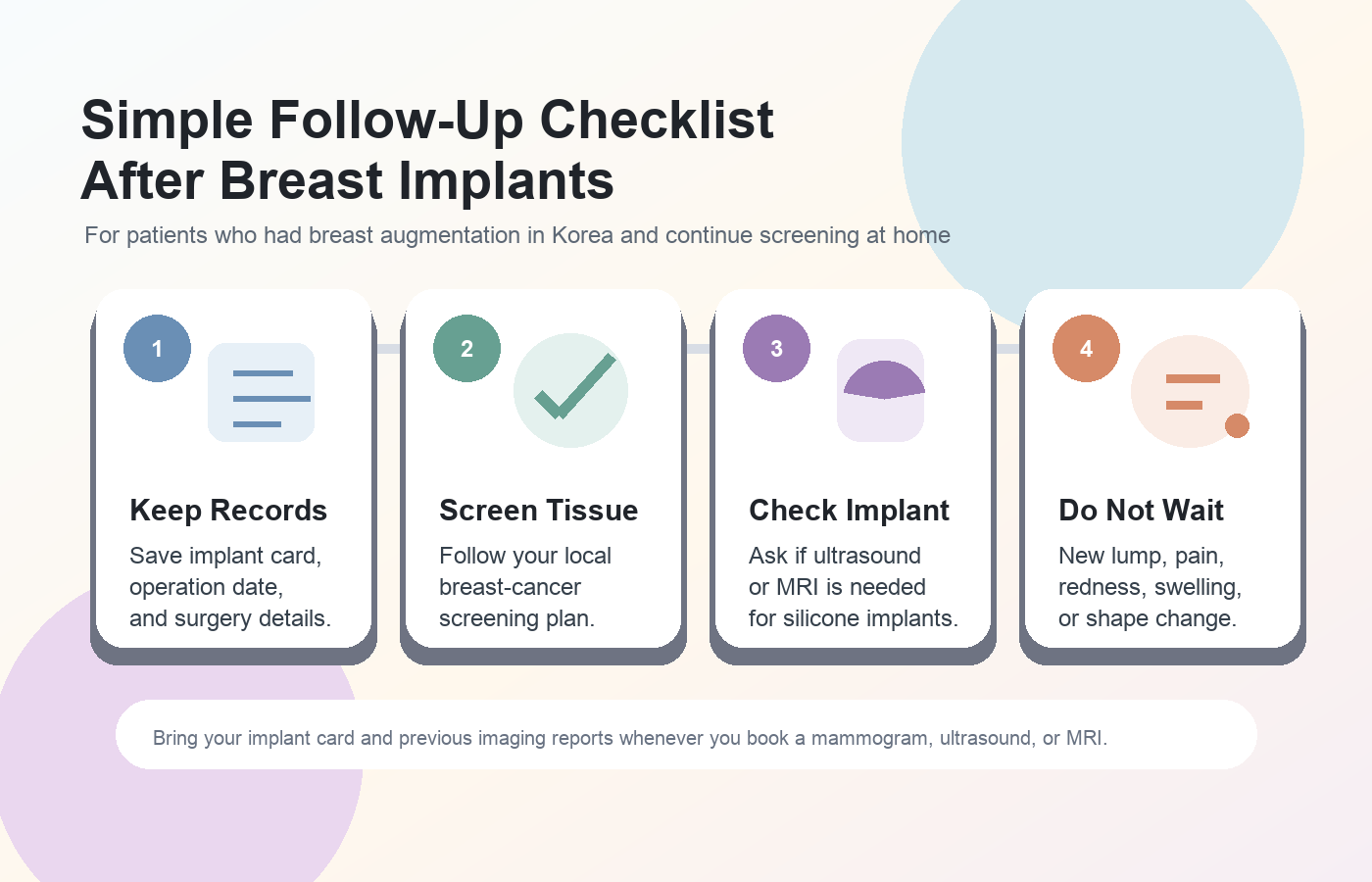
Rather than asking, “Do I need an MRI?” it is better to ask three separate questions:
- What breast-cancer screening do I need for my age and personal risk?
- What implant surveillance is recommended for my implant type and surgery date?
- Which symptoms should lead to earlier evaluation?
This makes long-term care easier, especially for patients who have surgery in Seoul and continue screening in their home country. Breast implants are not lifetime devices, and good long-term care should continue after the early recovery period is finished.
This article is for general educational purposes only. It does not replace an individual examination, radiology recommendation, cancer-screening plan, or advice from the clinicians responsible for your care.
Pingback: Breast Implant Revision in Korea: Records to Bring
Pingback: Capsular Contracture Korea: Signs & Revision Options