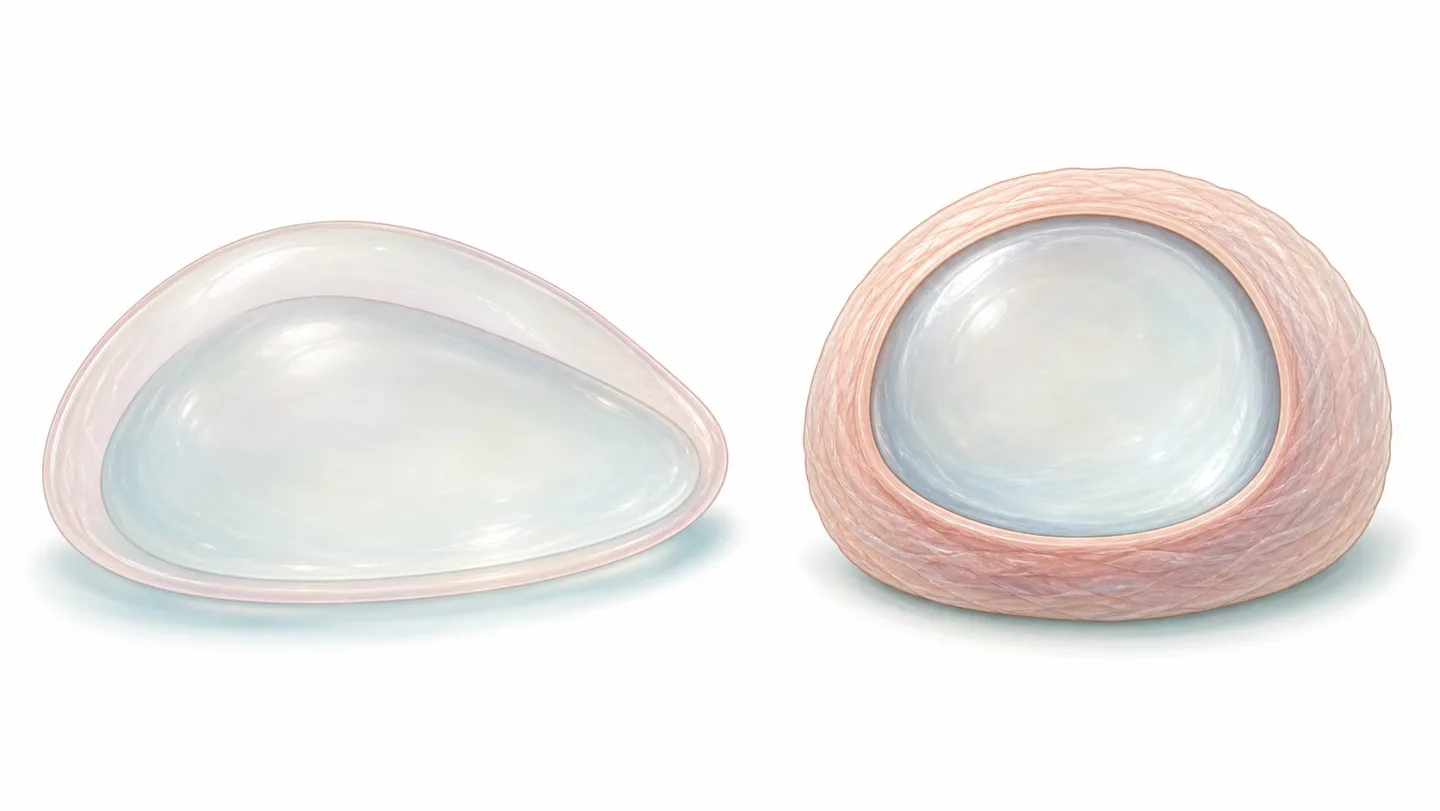
I am Sangmun Choi, MD, PhD (최상문 박사, 라이안성형외과), a plastic surgeon in Seoul specializing in breast surgery and international patient care. A normal thin capsule forms around every breast implant. Capsular contracture is different: the capsule becomes abnormally tight and may make the breast feel firm, look distorted, or become painful.
Quick answer: Early signs may include increasing firmness, a breast that sits higher or changes shape, discomfort, or asymmetry. Not every firm breast is capsular contracture, and treatment depends on the severity, implant condition, tissue coverage, and the cause of the change.

A normal capsule is not a complication
The body naturally forms scar tissue around an implant. In most patients, this capsule remains soft and flexible. Capsular contracture occurs when the capsule tightens enough to change breast feel, appearance, or comfort.
It can develop after primary augmentation or after revision surgery. The timing varies, and a new late change should be evaluated rather than assumed to be normal aging.
Possible signs of capsular contracture
- One breast becoming progressively firmer
- A breast appearing higher, rounder, or more fixed
- Increasing asymmetry or visible distortion
- Tightness or pain, especially as the condition progresses
- Reduced natural implant movement
These symptoms can overlap with implant displacement, rupture, fluid, infection, muscle-related movement, or changes in the breast tissue. Diagnosis requires clinical evaluation and sometimes imaging.
How severity is assessed
Clinicians often describe capsular contracture using the Baker grading system. Grade I generally feels soft and appears natural. Grade II may feel somewhat firm without obvious distortion. Grades III and IV are more likely to involve visible distortion, marked firmness, and, in Grade IV, pain.
The grade is only one part of the decision. Implant position, rupture status, soft-tissue thickness, previous operations, and the patient’s goals also influence treatment.
Does every case require complete capsule removal?
No. Treatment is individualized. Mild cases without significant symptoms may be observed. When surgery is appropriate, options may include releasing the capsule, removing part or all of it, exchanging or removing the implant, changing the implant pocket, and improving soft-tissue coverage.
A 2023 systematic review found that capsulectomy, implant exchange, and pocket change appear useful for reducing recurrence, but also emphasized that high-level evidence remains limited. This is why a single operation cannot be presented as the correct answer for every patient.
Evaluation for international revision patients
Before traveling to Korea for possible revision, collect your implant card, operative records, previous imaging, and a timeline of when the breast became firm or changed shape. Clear photographs can help with preliminary discussion, but an in-person examination is still necessary.

At Ryan Plastic Surgery Clinic in Korea, I evaluate the capsule together with implant position, chest anatomy, soft-tissue coverage, and the reason the first result changed. Revision planning may also connect with our guides to breast imaging after augmentation and breast implant placement.
Frequently asked questions
Can capsular contracture happen only on one side?
Yes. One breast may become firmer or more distorted than the other, although bilateral cases can also occur.
Does firmness always mean capsular contracture?
No. Firmness can have several causes. A qualified examination, and sometimes ultrasound or MRI, may be needed to identify the problem.
Can capsular contracture return after revision?
Yes. Revision aims to correct the current problem and reduce recurrence risk, but no operation can guarantee that contracture will never return.
When should I seek urgent evaluation?
Promptly contact a clinician for rapid swelling, redness, drainage, fever, severe or increasing pain, trauma, or a sudden shape change.
This article provides general education and does not replace an individual examination, diagnosis, or treatment recommendation.