If you are researching breast augmentation Korea thin patients, you may already know the main concern.
You may want a natural result, but you may also worry that an implant will look obvious because your skin, breast tissue, or body fat is thin. This is a very real concern. In thin patients, even a well-chosen implant can become more visible if the surgical plan does not respect the patient’s anatomy.
At Ryan Plastic Surgery Clinic in Korea (최상문 박사, 라이안성형외과), thin-patient breast augmentation is planned differently from a standard case. The goal is not simply to increase size. The goal is to create a soft upper breast line, avoid visible implant edges, reduce rippling risk, and match the implant to the patient’s chest width, soft tissue, and lifestyle.

Breast Augmentation Korea Thin Patients: Quick Answer
For thin patients, breast augmentation in Korea often requires more than choosing an implant size. The surgeon must evaluate the rib cage, breast width, skin elasticity, soft-tissue thickness, and the amount of fat available for grafting.
In selected patients, hybrid breast augmentation can be helpful. This means using an implant for structure and volume, then adding small amounts of fat grafting to soften visible edges and improve the transition from the chest wall to the implant.
Fat grafting does not replace good implant planning. It supports it.
Why Thin Patients Need a Different Breast Augmentation Plan
Thin patients often have less natural tissue covering the implant. This can make several issues more noticeable:
- Implant edges
- Rippling or wrinkling
- A sharp upper-pole transition
- Too much roundness for the patient’s frame
- Narrow breast width
- Chest-wall or rib visibility
- Less margin for error in implant size
These are not reasons to avoid surgery automatically. They are reasons to plan more carefully.
In thin patients, the implant should not be chosen only by volume in cc. The surgeon should first ask: What implant width fits the chest? How thick is the tissue? Where will the implant edge sit? Can fat grafting improve the transition? Would subfascial, dual plane, or another pocket be safer?
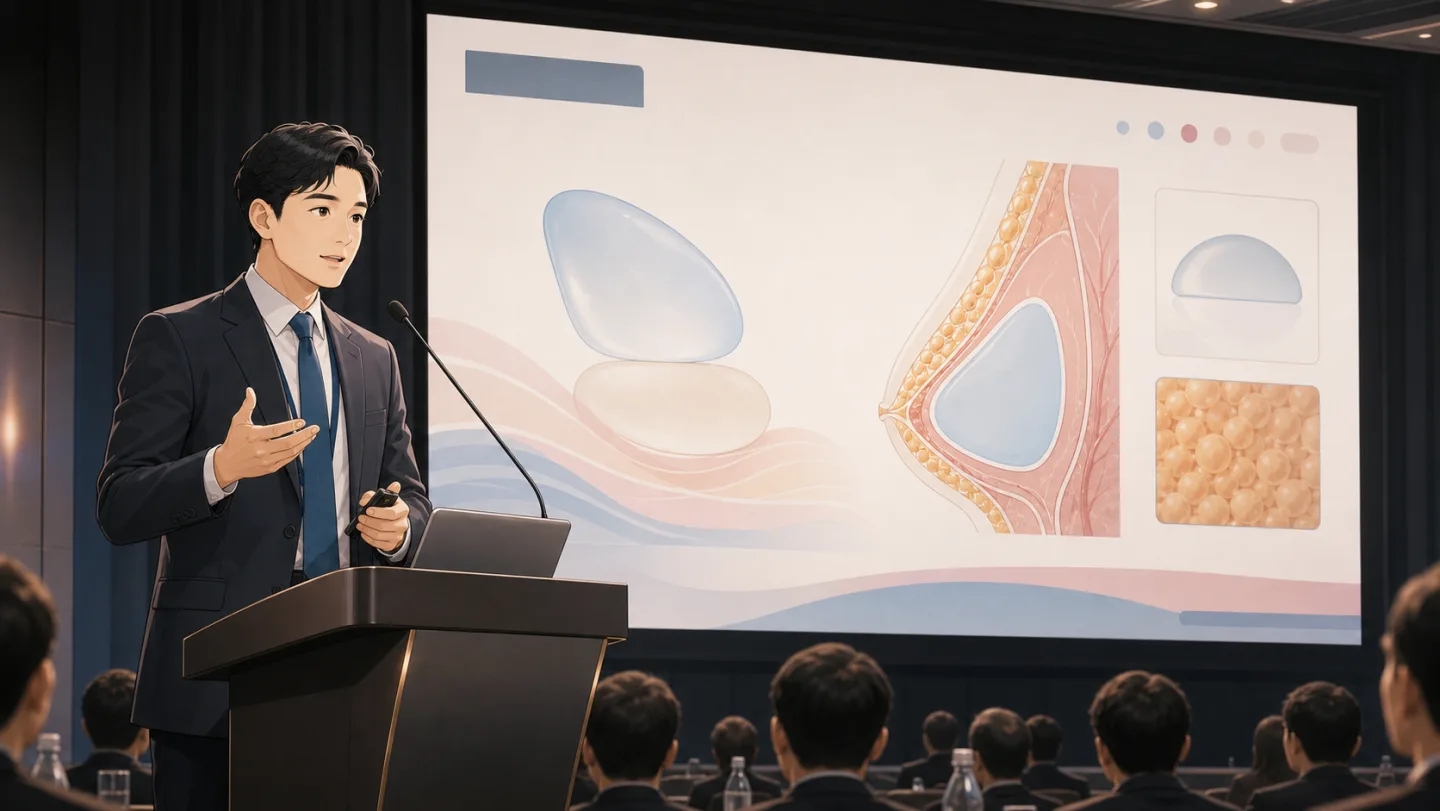
Dr. Sangmun Choi’s 2024 Conference Presentation on Thin Patients
In 2024, Dr. Sangmun Choi presented on breast augmentation in thin patients at the Autumn Meeting of the Korean Society of Plastic and Reconstructive Surgeons. The presentation focused on minimizing complications and improving the final contour in patients with thin tissue.
One of the key messages was simple: in thin patients, beautiful breast augmentation is not only about the implant. It is about analyzing the patient’s bony structure, soft tissue, expectations, chest width, and pocket selection.
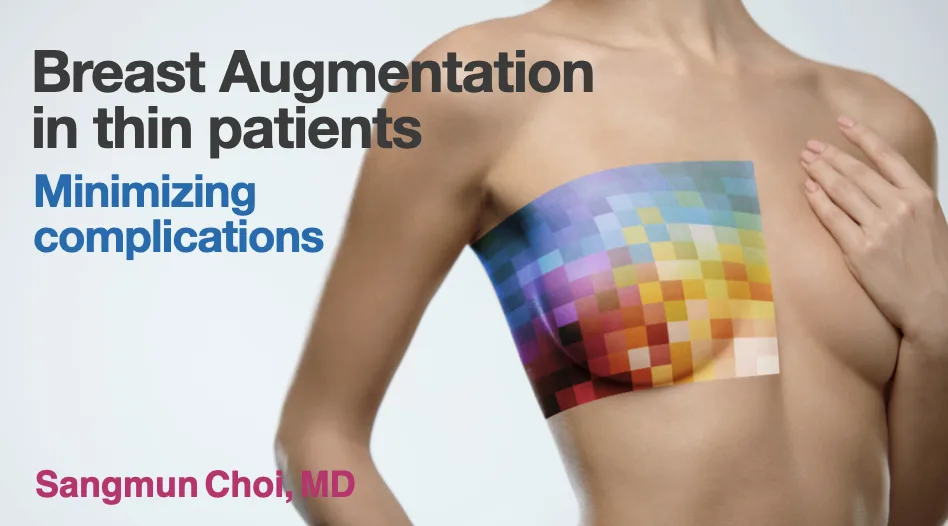
This is why the consultation should be more detailed in thin patients. A smaller frame often needs a more refined plan, not just a smaller implant.
What Makes Thin-Patient Breast Augmentation Difficult?
Thin patients can have high expectations because they often want a natural result that does not reveal surgery. At the same time, they may have less tissue available to hide the implant.
The main planning points include:
- Bony structure: Rib shape and chest wall width can strongly affect the final breast shape.
- Soft tissue: Thin skin, thin breast tissue, and low subcutaneous fat can make implant edges more visible.
- High expectations: Many thin patients want a result that looks natural even in fitted clothing.
- Small width: A narrow chest can limit implant width and size.
- Pocket selection: Subpectoral, dual plane, subfascial, or Preserve Technique planning should be selected according to anatomy.
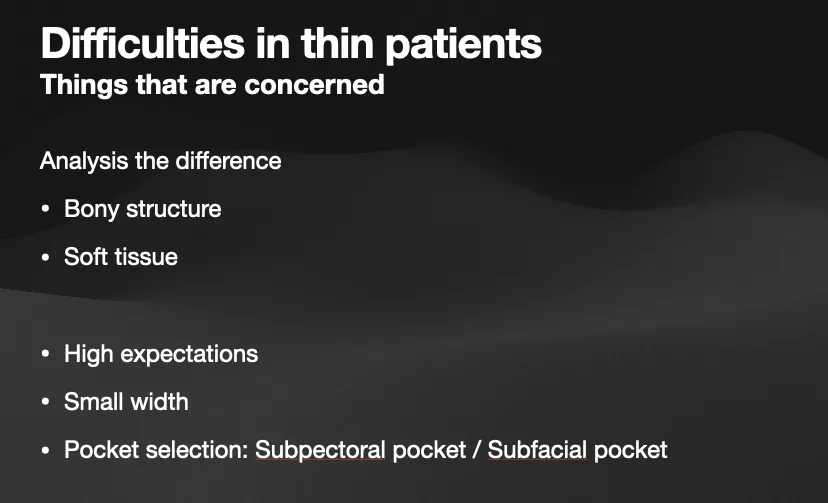
This is where surgeon experience matters. Thin patients can still have beautiful results, but the plan must be more precise.
What Is Considered “Thin” in Breast Augmentation Planning?
BMI can be one simple reference point. In general medical classification, a BMI under 18.5 is often considered underweight. However, BMI alone is not enough for breast augmentation planning.
Some patients have a normal BMI but very thin breast tissue. Others have a low BMI but enough tissue in certain areas. This is why the consultation should include direct assessment of skin thickness, breast tissue, chest width, rib shape, and available donor fat.
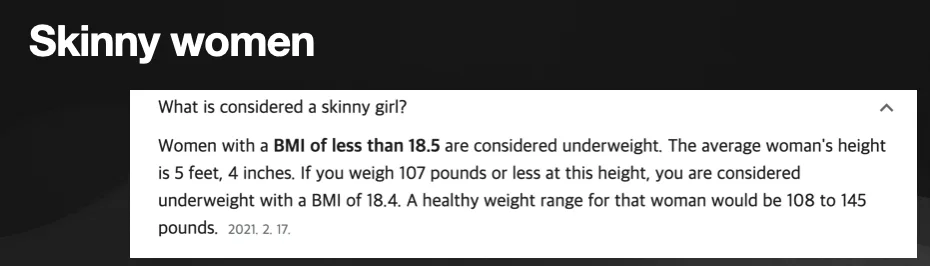
In other words, the question is not only “Am I thin?” The better question is: “Do I have enough soft-tissue coverage for the implant plan I want?”
How Fat Grafting Helps Thin Patients
Fat grafting can be useful because it adds a thin, soft layer of the patient’s own tissue around selected areas of the implant.
In thin-patient breast augmentation, fat grafting is commonly considered for:
- Softening the upper breast slope
- Covering visible implant edges
- Improving the transition between chest wall and implant
- Reducing the appearance of rippling in selected areas
- Making the result look less round and less artificial
- Improving asymmetry or contour irregularities
This is often called hybrid breast augmentation: implant plus fat grafting.
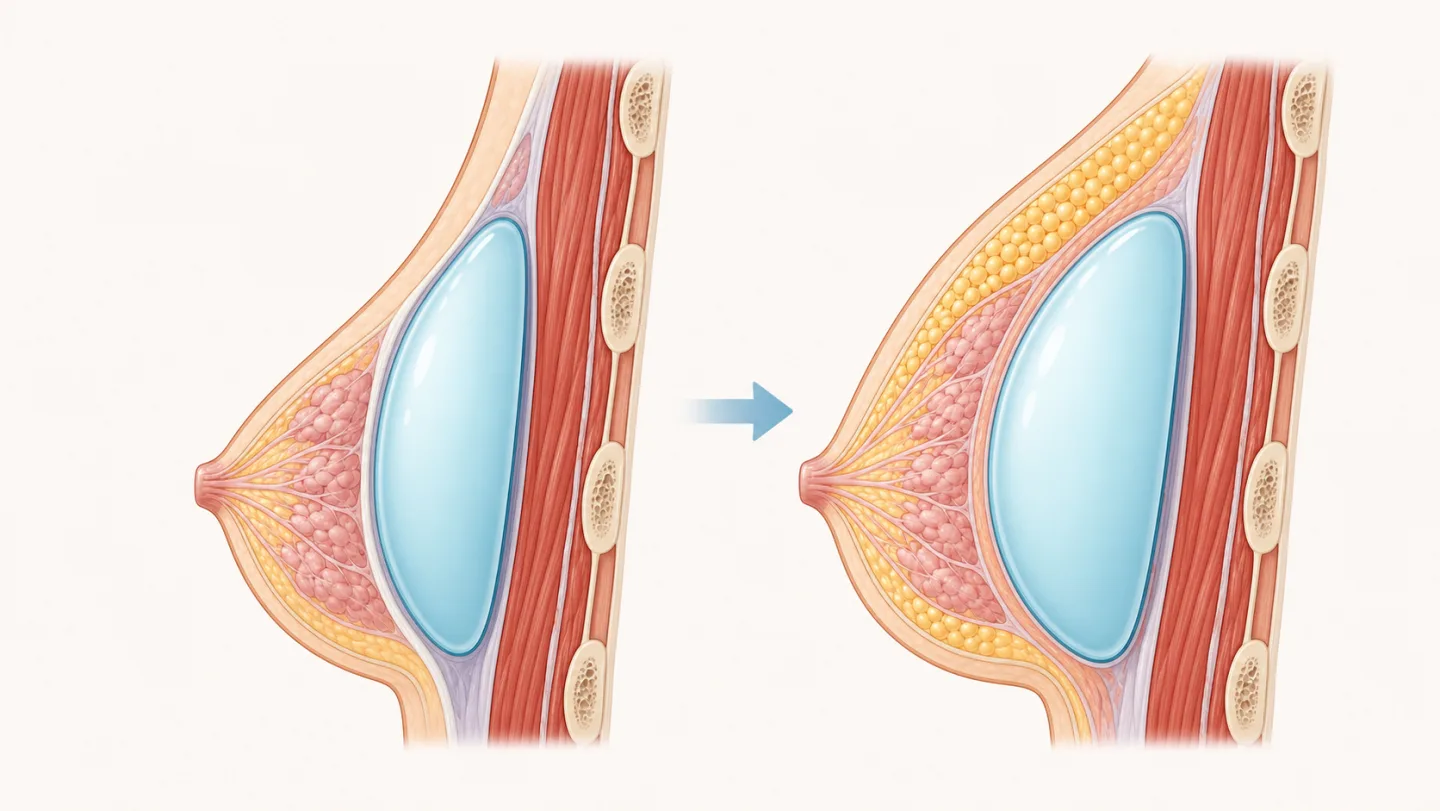
The implant provides structure and predictable volume. The fat grafting helps refine the surface and soften the outline.
Why Fat Grafting Does Not Replace Implant Planning
Fat grafting is helpful, but it is not magic.
Thin patients may have limited donor fat. Some of the grafted fat may be absorbed over time. The amount of fat that survives can vary from person to person. If the implant is too large, too wide, or poorly matched to the chest, fat grafting cannot fully correct the problem.
This is why the sequence matters:
- Choose the right implant width.
- Choose the right implant size and profile.
- Choose the safest implant pocket.
- Use fat grafting only where it improves the contour.
The best result comes from combining decisions carefully, not relying on one technique alone.
Motiva Implants, Thin Tissue, and Natural Results
Motiva implants are often discussed for thin patients because many patients want a soft, natural-looking result. In selected cases, Motiva can be combined with tissue-preserving techniques and fat grafting to create a smoother line.
At Ryan Plastic Surgery Clinic, implant selection is based on:
- Chest width
- Existing breast tissue
- Desired size
- Skin tightness
- Risk of implant visibility
- Whether fat grafting can improve coverage
- Lifestyle and exercise habits
You can read more about Motiva here: Motiva Implants in Korea: Why They Are Popular for Natural Breast Augmentation.
Subfascial, Dual Plane, or Submuscular: Which Is Better for Thin Patients?
There is no single best implant pocket for every thin patient.
For some thin patients, under-the-muscle or dual plane placement may provide more coverage. For others, subfascial or Preserve Technique planning may be possible, especially if the patient has enough tissue or if fat grafting can support the contour.
The important point is not to choose a pocket because it is trendy. The implant pocket should be chosen because it fits the patient’s body.
You can read more about pocket selection here: Breast Implant Placement in Korea: Subfascial vs Submuscular vs Dual Plane.
Preserve Technique and Thin Patients
Preserve Technique breast augmentation focuses on minimizing unnecessary tissue trauma and preserving important structures when anatomy allows it.
In thin patients, this approach must be selected carefully. Muscle preservation can be attractive because it may reduce discomfort and animation deformity, but the patient still needs enough soft-tissue coverage for a natural result.
For suitable patients, Ryan Plastic Surgery Clinic may consider Preserve Technique together with Motiva implants and fat grafting. For other patients, a different pocket may be more appropriate.
You can read more here: Preserve Technique Breast Augmentation in Korea.
A More Natural Line: What the Surgeon Is Trying to Create
In thin patients, the most important visual goal is often the upper breast transition.
A natural breast does not usually begin suddenly at the upper chest. It has a gradual slope. If the implant edge is too visible, the result can look artificial even if the implant size is not large.
Fat grafting can help create a softer transition by adding volume in selected thin areas. This is especially useful when the patient wants a natural result rather than a dramatic, round look.
What International Patients Should Know
Many international patients stay in Korea for about one week after breast augmentation, then return to their home country after early follow-up.
For thin patients who also have fat grafting, recovery planning should be clear. There may be recovery at both the breast area and the fat donor area. Bruising and swelling can vary. Patients should also understand activity limits, medication instructions, and remote follow-up.
Because infection is always possible after surgery, antibiotics or additional medication may be prescribed before traveling home when appropriate. Follow the medication plan exactly as instructed.
For more recovery planning, see: How Long Should You Stay in Korea After Breast Augmentation?.
Questions Thin Patients Should Ask During Consultation
Before choosing breast augmentation in Korea, thin patients should ask:
- Is my breast tissue thick enough for the implant I want?
- What implant width fits my chest?
- Am I at risk for visible implant edges or rippling?
- Would fat grafting improve my upper breast line?
- Do I have enough donor fat for grafting?
- Which pocket is safest for my body?
- Am I suitable for Preserve Technique?
- Would Motiva implants be appropriate for my anatomy?
- How much of the result depends on fat survival?
- What happens if I need follow-up after returning home?
Clear answers are more useful than a simple promise of a natural result.
FAQ: Breast Augmentation Korea Thin Patients
Can thin patients get breast augmentation in Korea?
Yes. Thin patients can be candidates for breast augmentation, but they need careful planning. The surgeon must evaluate tissue thickness, chest width, implant size, implant pocket, and whether fat grafting can improve coverage.
Why is breast augmentation harder in thin patients?
Thin patients often have less soft tissue covering the implant. This can make implant edges, rippling, or a sharp upper breast transition more visible.
Can fat grafting make breast implants look more natural?
In selected patients, yes. Fat grafting can soften the upper breast slope and implant edges, helping create a smoother line. However, fat grafting does not replace correct implant sizing or pocket selection.
Is subfascial breast augmentation possible for thin patients?
Sometimes. Subfascial placement may be possible if the patient has enough tissue coverage or if fat grafting can help. Very thin patients may still need dual plane or another approach.
Are Motiva implants good for thin patients?
Motiva implants may be a good option for selected thin patients who want a soft, natural result. The decision depends on anatomy, tissue thickness, implant size, and the overall surgical plan.
Bottom Line
Breast augmentation for thin patients is not just a smaller version of standard breast augmentation.
Thin patients need more precise planning because small differences in implant width, pocket selection, and tissue coverage can become visible. In selected patients, combining implants with fat grafting can create a softer upper breast line and a more natural transition.
At Ryan Plastic Surgery Clinic in Korea (최상문 박사, 라이안성형외과), thin-patient breast augmentation is planned by evaluating bony structure, soft tissue, chest width, expectations, implant pocket, and whether hybrid fat grafting can improve the final line. This approach reflects the same topic Dr. Sangmun Choi presented at the 2024 Korean Society of Plastic and Reconstructive Surgeons Autumn Meeting: minimizing complications while creating a more beautiful, natural result in thin patients.
This article is for general educational purposes only and does not replace medical advice. All surgery carries risks, including bleeding, infection, capsular contracture, implant malposition, asymmetry, fat absorption, contour irregularity, changes in sensation, and the possibility of revision surgery. Please consult a qualified plastic surgeon for advice specific to your body and goals.
References:
Great content! Keep up the good work!
Thank you 🙂
Pingback: Breast Implant Malposition Signs: When to Seek Review
Pingback: Breast Implant Revision in Korea: Records to Bring
Pingback: Breast Implant Follow-Up Schedule | Korea
Pingback: Breast Implant Card and Warranty: What to Keep
Pingback: Motiva Preservé Korea: Subfascial or Subglandular